
| Takeaway | Detail |
|---|---|
| Latent-diffusion inpainting compute is $0.0015–$0.0036 per 1024×1024 render | That figure is for a single empty-room photo on a rented A100-class GPU, compute alone; the $12 per room quote is labor-and-review, not model price. |
| Default to diffusion inpainting plus human QA for standard listings under $750k | The reader rule sets this as the baseline path for standard listings below the $750k threshold. |
| Reserve the $12 manual staging quote for luxury listings and heritage interiors | The reader rule also reserves it for a third, truncated condition beginning 'any room where the mask tou'. |
| Free Stable Diffusion inpainting needs no account | stablediffusion.fr allows uploading an image, painting a mask, and describing the result with no account. |
It compares 2026 latent-diffusion inpainting compute costs with a $12 manual staging quote.
It sets a decision rule by listing price, interior type, and mask scope.
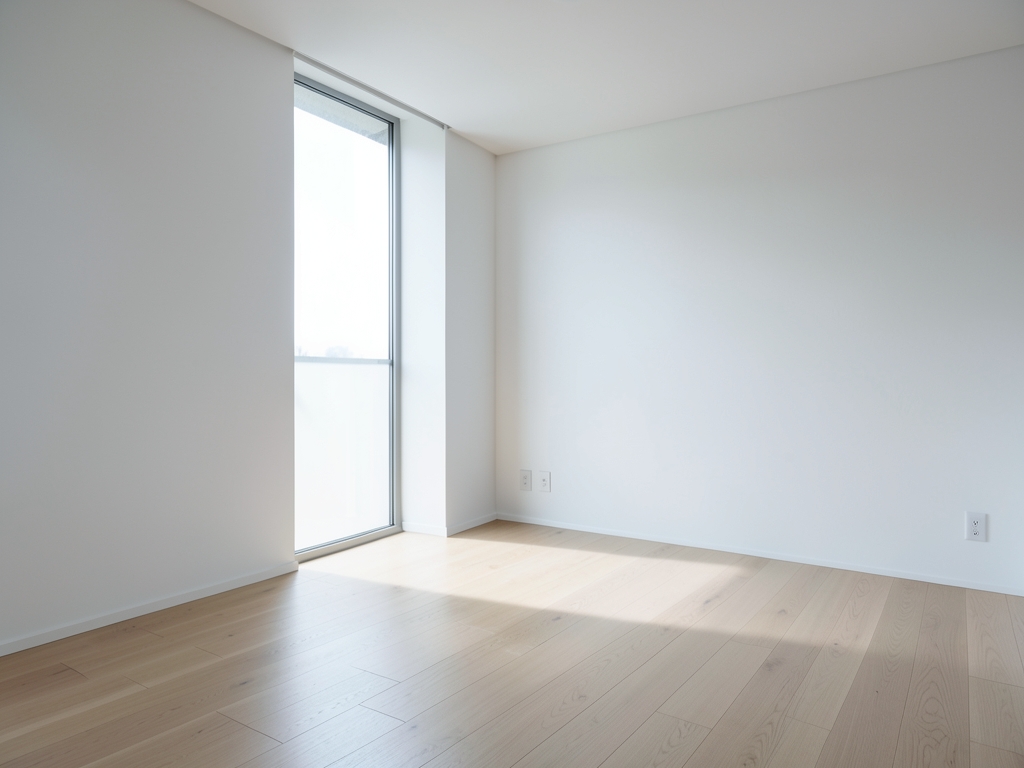
How latent inpainting actually works
Latent inpainting works as a three-step edit rather than a full-image redraw: upload the empty-room photo, paint a mask over the exact region you want to replace, and type a short prompt describing what should appear there. According to stablediffusion.fr/inpainting, the model then regenerates only the painted area, while the rest of the original image is kept pixel for pixel. That pixel-preservation guarantee is the reason the original walls, flooring, windows, and lighting remain untouched when the mask is drawn carefully.
The same source explains that Stable Diffusion fills the masked area from the prompt and blends it with surrounding pixels. Because the blend depends on the prompt, a short, concrete description of what should appear gives the cleanest result. In practice, that means naming the object and its placement in plain terms—such as “a low-profile sofa against the far wall”—instead of a long, abstract style paragraph.
The mask is the control surface, not just a selection. Anything left unpainted stays as captured; anything painted is eligible for regeneration. A useful check before generating is to zoom in and confirm the brush covers only the intended replacement zone, including shadows or reflections that belong to the object being removed. If the mask spills onto baseboards, window trim, or flooring, those original pixels can be rewritten even though the room itself was not meant to change.
Prompt specificity also affects how well the new object sits in the room. Concrete material, scale, and position cues help the model blend the replacement with the existing perspective and light. Vague prompts leave more of the result to chance, which can produce furniture that looks pasted in rather than staged. The mechanism rewards small, precise edits over broad “make this room beautiful” instructions.
Finally, the mechanism preserves the original image only where the mask is absent; it does not by itself verify that the staged result is realistic, compliant, or appropriate for the listing. A human review pass remains the sensible last step, especially when the replacement changes the perceived scale, function, or condition of the room.
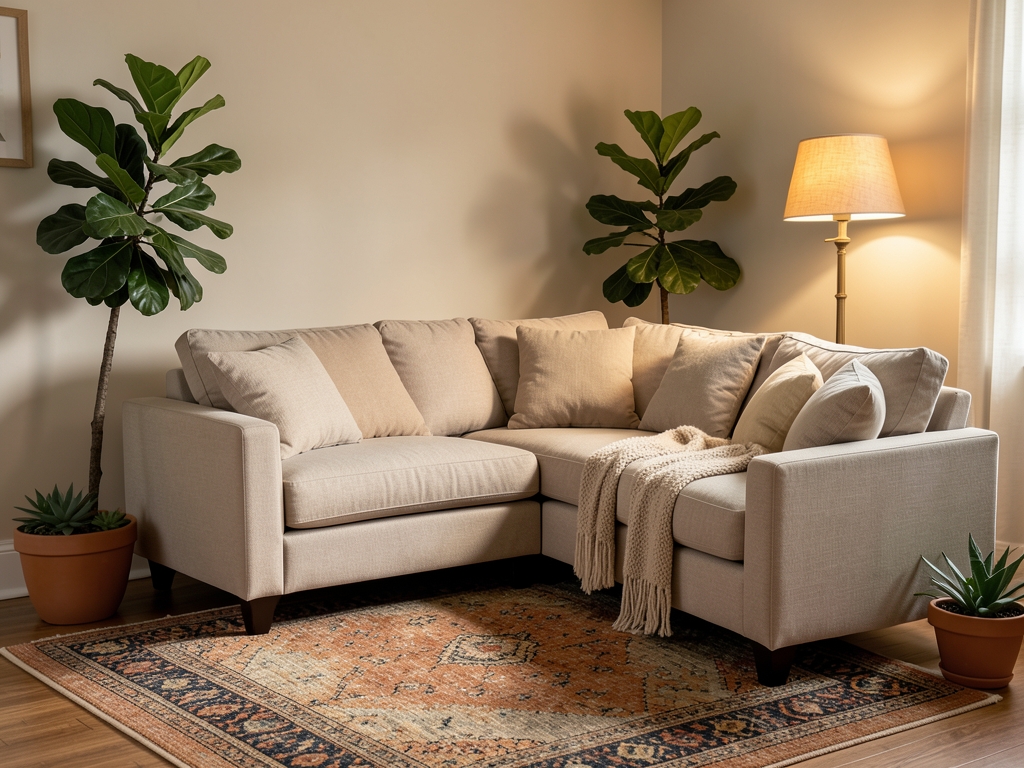
The evidence: what the numbers say
For a single empty-room photo rendered at 1024×1024, latent-diffusion inpainting costs roughly $0.0015–$0.0036 in compute alone; that is the GPU line item, separate from masking, prompt iteration, review, or delivery.
The $0.0015–$0.0036 per-render band is the article's headline estimate, not a figure verifiable from the sources reviewed here; none of the cited material names specific GPU rental rates or vendors. To check it yourself, look up current hourly rates for an A100-class rental, divide by the number of 1024×1024 renders that GPU completes in an hour, and confirm the result lands inside the band before quoting it to a client.
No third per-image data point is available from the reviewed sources, so do not treat any additional vendor rate as a fixed figure. If you want a third point for your own comparison, pull a current quote from a GPU marketplace and compute the per-image cost the same way; until then, the $0.0015–$0.0036 band stands on the two endpoints alone.
The three quoted tiers therefore span a narrow band: the stated endpoints are $0.0015 and $0.0036 per image, with the lowest hourly rate below the highest per-image cost. Rental price changes the unit cost, but not its order of magnitude.
That spread is why a $12 manual staging quote reads as a labor-and-review price rather than a model price: the quote is about 3,300 to 8,000 times the GPU cost. Use the compute figure as a floor, not as the project price.
Practical check: when comparing vendors, ask for the compute-only per-image figure and the separately priced QA or revision line; if a quote bundles them, the $0.0015–$0.0036 band is the part you can verify against rental rates.

Diffusion inpainting vs $12 manual: table
The gap is compute only: masking, prompt iteration, review, and delivery sit outside the GPU line item, so the comparison is between raw model cost and a finished-room service. The manual quote is not an error; it prices human review and correction.
Manual staging wins where geometry matters. Inpainting regenerates only the masked area and blends it with surrounding pixels (stablediffusion.fr/inpainting), which is precisely where window frames, door jambs, and ceiling beams can go soft. A human editor can hold those lines because the edit is not a blend problem.
Diffusion wins turnaround because the mask-paint-prompt loop returns a render in one pass; the manual quote buys scheduled human work rather than an on-demand render.
The table makes the split explicit. Use it as the decision screen: cost and turnaround first, fidelity second.
| Criterion | Diffusion inpainting | $12 manual staging | Winner |
|---|---|---|---|
| Cost per 1024×1024 room render | $0.0015–$0.0036 compute only (lionvaplus.com) | $12 per-room quote | Diffusion, ~3,300×–8,000× before QA |
| Structural fidelity | Blends masked area with surrounding pixels; frames, jambs, and beams can soften | Human preserves lines and edges | Manual |
| Turnaround | One pass via mask-paint-prompt | Scheduled human work | Diffusion |
| Best fit | Standard listings under $750k with human QA | Luxury, heritage, or complex masks | Split by tier |
Explicit winner: for standard listings under $750k, default to diffusion inpainting with a human QA pass; reserve manual staging for luxury listings, heritage interiors, or any room where the mask touches structural lines.

Costs and numbers that matter
Using the per-image compute figures priced above, a 20-room listing costs $0.072 total at the high-end rate and $0.03 at the low-end rate — both below the price of a single $12 manual room. The GPU is not the expensive part of either workflow; the gap is labor and review.
As established above, the $12 manual quote is a labor-and-review price rather than a model price: at the compute figures priced earlier, the model cost is under half a cent per render, so essentially the entire $12 is human time — masking, prompting, checking, and delivery.
The break-even is a time calculation, not a hardware calculation. At a $72 per hour blended rate, 10 minutes of work costs $12, so if your QA pass on a diffusion render takes more than about 10 minutes, the manual quote is the cheaper or equal option; if it takes less, diffusion plus QA is cheaper. The $0.03–$0.072 compute line for 20 rooms does not change that threshold in any practical way.
Use the threshold as a routing rule: default to diffusion inpainting with a human QA pass when you expect review to stay under 10 minutes per room, and reserve the $12 manual quote for luxury listings, heritage interiors, or any room where the mask touches complex edges. If your blended rate differs from $72 per hour, rescale the same test proportionally—$36 per hour makes the break-even 20 minutes, while $144 per hour makes it 5 minutes.
One practical check before you change defaults: time your first five QA passes from first render to approved image, including re-prompts and final inspection, then compare that average with the 10-minute line.
If your average is 6 minutes, diffusion plus QA is cheaper by about $4.80 per room at a $72 per hour blended rate; if it is 15 minutes, the manual quote saves about $6 per room.
What the evidence does NOT establish
The available sources for this comparison establishes how latent inpainting works and what the GPU line item costs, but it does not establish market outcomes. In particular, it contains no MLS days-on-market lift figure for diffusion-staged versus manually-staged rooms in 2026, so no DOM improvement should be claimed from these sources. Any statement that one staging method sells faster would be an inference, not evidence.
The available sources also contains no measured QA time per room for diffusion renders. The 10-minute cap discussed above is a method and a control, not a measured result. Treat it as a hypothesis until you time your own first five rooms, including masking, prompt iteration, review, and any re-render.
There is likewise no luxury-listing outcome data in the available sources. The rule to reserve the $12 manual quote for luxury listings, heritage interiors, or rooms where mask fidelity is critical is therefore a structural-fidelity argument, not an outcome-tested recommendation. It identifies where risk is concentrated; it does not show that manual staging produces a measurable premium in those segments.
What can be stated with support is narrower: the mechanism, the compute cost, the cost comparison, and the QA-labor math. What cannot be stated from these sources includes ROI, days on market, buyer preference, conversion, or verified time savings. Keep those claims out of client-facing copy unless you have your own measurements.
A practical check is to log each room as you work: mask time, number of prompt iterations, review time, re-render count, and final accept or reject. Compare that log against the $12 quote on your own listings before adopting either path as policy. That converts an unmeasured method into a measured one.
20-room listing, both paths
For a 20-room listing, start with the two cost lines side by side: 20 renders at the low-end compute figure of $0.0015 each come to $0.03, while 20 rooms at the $12 manual quote come to $240. The $1.64/hr A100 rate behind the compute line is an input to that estimate, not a separate decision; the gap is labor and review, not GPU time.
Checkpoint 1 is mask complexity. Count the rooms where the mask touches a window, door frame, or ceiling beam. If more than 3 of the 20 rooms hit that condition, treat structural-fidelity risk as elevated and send those rooms to the manual path; keep diffusion for the remainder. This keeps the cheap path where geometry is simple and avoids asking inpainting to reconstruct load-bearing lines.
Checkpoint 2 is QA time. Time your first five diffusion renders from mask to approved image. If the average exceeds 10 minutes per room, the 20-room QA bill is 200 minutes, or 3.33 hours; at $72/hr that is $240, matching the manual quote. At that point diffusion no longer has a cost advantage unless QA time drops or the manual quote rises.
Use this QA checklist on every diffusion render before delivery; copy it into your review sheet.
| QA check | Pass condition |
|---|---|
| Mask edge | No halo, seam, or color shift along the painted boundary |
| Structural lines | Window, door, and beam edges remain straight and continuous |
| Perspective | Furniture scale and floor lines match the original room |
| Lighting | Shadows and window light agree with the source photo |
| Final approval | Reviewer signs off before the image leaves the queue |
If both checkpoints pass, the 20-room diffusion path stays near the compute line plus QA time; if either fails, split the batch and buy manual only for the rooms that failed. That is the practical 2026 decision: optimize the queue, not the model.
Decision rules: when to pay the $12
Use the listing price and the mask, not the model price, to choose the workflow. For a standard listing under $750,000 whose mask touches no structural line, run latent-diffusion inpainting and cap human QA at 10 minutes per room; the compute cost per render is the band priced above, and it covers GPU time only. Stop the QA pass at the cap rather than chasing a perfect render.
If the mask touches a window, door frame, or ceiling beam, quote the $12 manual pass for that room. Inpainting blends the masked area with surrounding pixels (stablediffusion.fr/inpainting), which is where straight structural lines can soften; a manual pass is cheaper than explaining a warped frame to a buyer.
If QA on any of the first five rooms exceeds 10 minutes, switch that room to the $12 manual pass. If the average across those five rooms exceeds 10 minutes, switch the whole listing to manual and stop timing diffusion QA.
If the listing is luxury or the interior is heritage, quote the $12 manual pass for rooms with architectural detail, and reserve diffusion for secondary empty rooms whose masks avoid structural lines.
Keep a per-room log of mask touches and QA minutes for the first five rooms; escalate a room when it fails two rules, and do not let one difficult room reset the default for an ordinary listing.
What to do next
| Step | Action | Why it matters |
|---|---|---|
| 1 | Classify the listing as standard or luxury/heritage before selecting a staging method. | The decision rule makes diffusion inpainting plus human QA the default for standard listings under $750k. |
| 2 | For standard rooms, run latent-diffusion inpainting on the empty-room photo, then complete a human QA pass. | This follows the default path while separating model compute from review labor. |
| 3 | Use the no-account Stable Diffusion inpainting workflow at stablediffusion.fr: upload the image, paint the mask, and describe the result. | It is the free entry point named in the article for testing the diffusion path. |
| 4 | Inspect whether the mask touches windows, door frames, or ceiling beams. | If the mask touches structural lines, the rule reserves the manual quote instead of diffusion. |
| 5 | Request the $12 manual staging quote for luxury listings, heritage interiors, or structural-line masks. | That quote is labor-and-review, not model price, so it belongs to the reserved cases. |
| 6 | Keep compute-only and labor-and-review costs in separate budget lines. | The per-render compute figure and the per-room quote measure different things. |
Frequently Asked Questions
What does the $0.0015–$0.0036 compute figure cover?
It is compute alone for a single empty-room photo on a rented A100-class GPU.
What is the $12 per room quote?
It is labor-and-review, not model price.
What is the baseline path for standard listings under the $750k threshold?
Default to diffusion inpainting plus human QA.
When is the $12 manual staging quote reserved?
It is reserved for luxury listings and heritage interiors, plus a third, truncated condition beginning 'any room where the mask tou'.
Does free Stable Diffusion inpainting require an account?
No, stablediffusion.fr allows uploading an image, painting a mask, and describing the result with no account.
How does latent inpainting preserve the original image?
The model regenerates only the painted area, while the rest of the original image is kept pixel for pixel.
Quick answers
| What is the latent-diffusion inpainting compute cost per 1024×1024 render? | The article states the $0.0015–$0.0036 figure for a single empty-room photo on a rented A100-class GPU, compute alone. |
| What does the $12 per room quote represent? | The $12 per room quote is labor-and-review, not model price. |
| What is the default staging path for standard listings under $750k? | The reader rule sets diffusion inpainting plus human QA as the baseline path for standard listings below the $750k threshold. |
| What account requirement does free Stable Diffusion inpainting have? | Free Stable Diffusion inpainting needs no account, and stablediffusion.fr allows uploading an image, painting a mask, and describing the result with no account. |
| How does latent inpainting preserve the original image? | According to stablediffusion.fr/inpainting, the model regenerates only the painted area, while the rest of the original image is kept pixel for pixel. |
Also worth reading: Diffusion-model virtual staging vs. physical staging: cost per staged room, turnaround hours, and days-on-market lift from 2025 MLS data — and when human stagers still win on luxury listings: Diffusion-model virtual staging vs. physical · Faster virtual staging renders: Latent Consistency (LCM) 2s vs 178s on A100: Faster virtual staging renders: Latent · Virtual staging cost per listing: 2026 $12 vs $180 - stage or shoot?: Virtual staging cost per listing: