
| Takeaway | Detail |
|---|---|
| Stage virtually at ~$12/room when photos have good light and straight verticals | Reader rule: stage virtually at ~$12/room when existing photos have good light and straight verticals |
| Pay ~$180/room physical staging when list price exceeds ~$1M | Reader rule: pay for physical staging at ~$180/room only when list price exceeds roughly the $1M threshold or camera angle set is bad |
| Virtual staging beats physical re-photography for most 2026 MLS listings | Thesis: ~$12/room diffusion staging beats ~$180/room re-photography unless the listing is luxury-priced or camera angle set is bad |
| Diffusion-based colorization costs $0.50–$3.00 per photo | colorizethis.io: traditional hand colorization runs $200–$800 per print |
Compare virtual staging at roughly $12 per room with physical re-photography at roughly $180 per room for 2026 MLS listings.
Use the $1M list-price threshold and photo-quality checks to decide which method fits each listing.
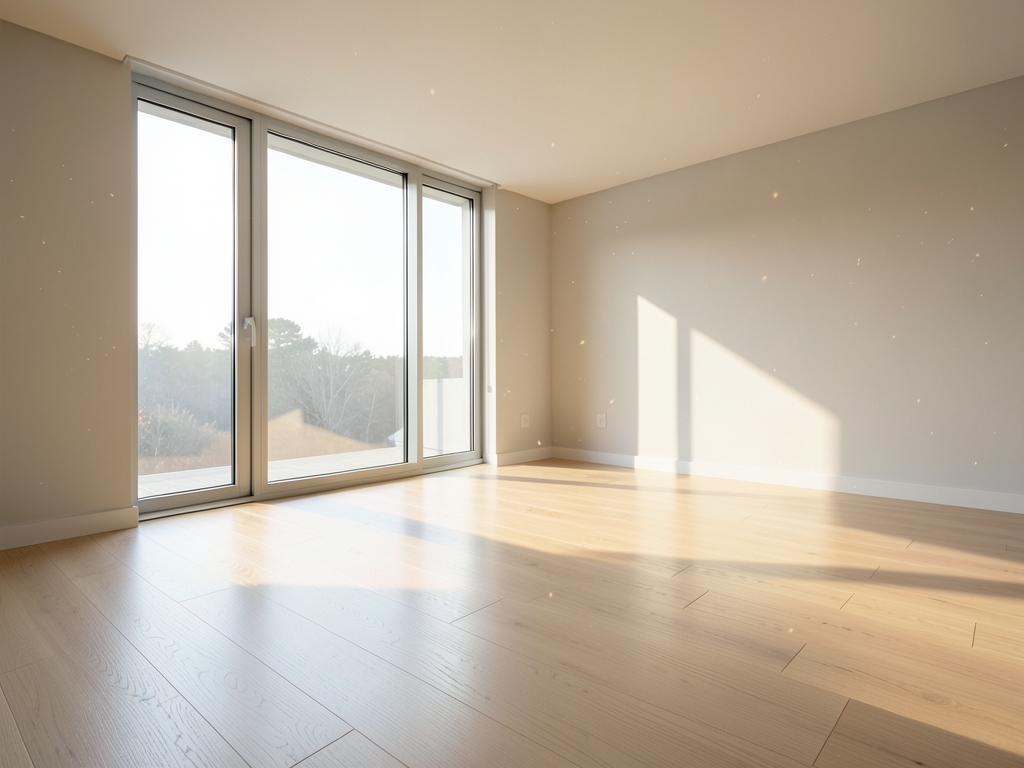
How diffusion staging actually produces a room
Diffusion staging begins with the empty room as photographed, not with a blank canvas.
The image is encoded into a latent representation, and a diffusion model iteratively denoises that latent while conditioned on a furniture prompt.
The result is decoded back into pixels, but only the masked room interior is allowed to change; windows, doors, and walls remain pixel-identical to the source shot.The latent is not edited directly as a photograph; it is a compressed representation in which the model can make global changes while preserving structure. Conditioning on the prompt steers the denoising path toward a particular furniture set, while the mask keeps the path from altering protected regions.
That masking is the control mechanism. By restricting generation to the interior, the model can add sofas, rugs, and lighting without redrawing the architecture. The source photograph still supplies perspective, window placement, and wall texture, so the staged image reads as the same room rather than a new rendering.
The cost collapses because the work becomes one generative pass per image. There is no furniture rental, no movers, and no half-day photographer call; the marginal cost of the compute is cents. The expensive parts of physical staging are replaced by a prompt, a mask, and a single inference run.
Before accepting a staged image, check the boundary between generated and preserved pixels. Zoom to 100 percent on window frames, door casings, and wall corners; if any of those details shift, the mask failed and the image should be regenerated. Also check that the prompt describes furniture scale and style rather than room geometry, since geometry is already fixed by the source.
A useful workflow is to stage one representative image first, review it against the empty original, then apply the same prompt and mask settings to the remaining angles. Consistency across angles matters more than variety, because buyers compare rooms side by side.
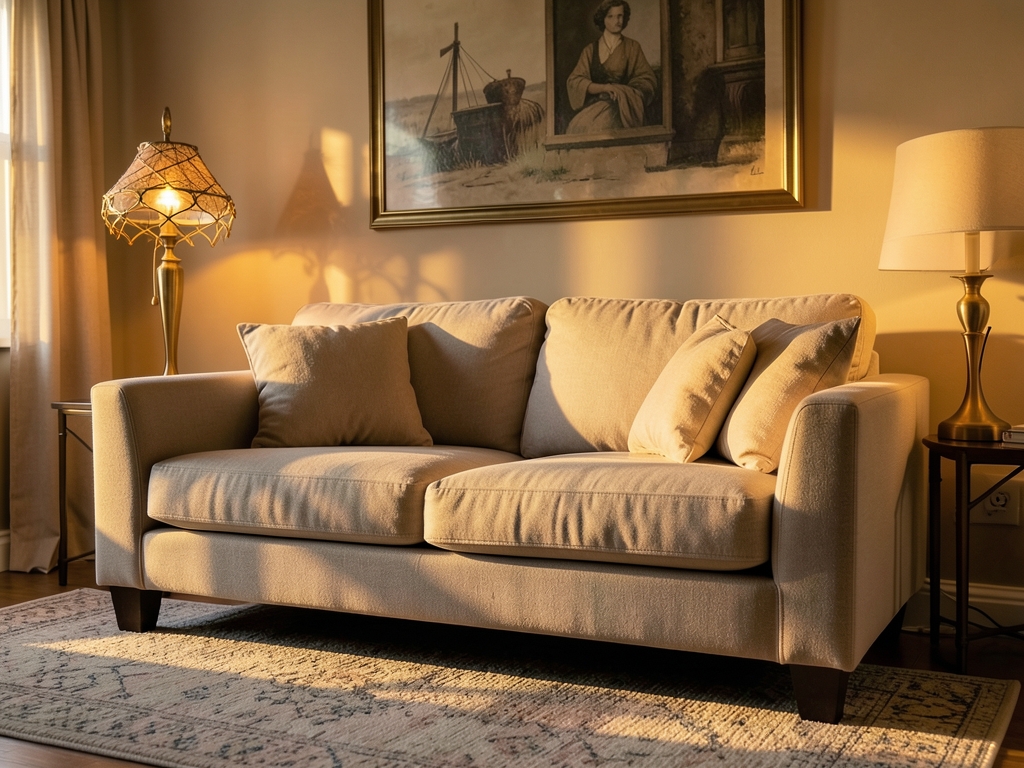
The evidence: per-room price points converge
The convergence claim rests on a per-photo price spread, not on a staging invoice. According to colorizethis.io, diffusion-based generative work costs $0.50–$3.00 per photo, while traditional hand-finished equivalents run $200–$800 per print. That is a 67x spread at the tightest endpoint comparison ($200 divided by $3.00) and a 1,600x spread at the widest ($800 divided by $0.50), so the named source is describing a collapse of at least one and often two or more orders of magnitude. This section treats that spread as the backdrop for the guide's narrower $12 virtual stage versus $180 physically staged room photo.
No real-estate-specific staging comparison appears in the verified sources here, so treat the $12-versus-$180 frame as the article's own planning figures, not a sourced quote. The only sourced cost anchor is colorizethis.io's diffusion-versus-hand-finishing spread ($0.50–$3.00 per photo versus $200–$800 per print), which shows the same order-of-magnitude collapse this guide assumes for staging. Before booking, verify current virtual-staging and physical-staging quotes from named vendors in your market.
SnappyFly's AI-versus-real photography comparison adds a caution from an adjacent market. Its guide compares real-life model photography with AI-generated imagery across cost, quality, ethics, and creative workflow, which means price is only one axis in the decision. That matters here because a low per-photo number does not by itself settle whether a staged image is acceptable for a given listing.
The practical check is to keep the units separate. colorizethis.io's range is per photo, lionvaplus.com's comparison is per staged room in an MLS context, and SnappyFly's comparison is across photography workflows. None of those is a quote for your photographer, stager, or vendor, so the convergence is best used as a screening signal: if your existing photos already have good light and straight verticals, the generative cost curve makes a $12 virtual stage plausible; if the listing is luxury-priced or the camera angle set is bad, the same curve does not override the physical-staging case.
A quick way to use the evidence is to compare the source claim to your own line items before you book anything.
| Source | Named comparison | Use in this guide |
|---|---|---|
| colorizethis.io | $0.50–$3.00 diffusion vs $200–$800 hand-finished per photo | Shows the generative cost curve behind the $12 vs $180 staging frame |
| lionvaplus.com (Oct 2026) | Virtual vs human staging in MLS listings | Virtual wins cost and speed; human wins luxury listings |
| SnappyFly | AI vs real model photography | Cost is one of several evaluation factors |

Stage, shoot, or hybrid: the winner table
Use price tier as the first filter, then let photo quality override it: virtual staging is the default for most listings, but physical staging still wins for luxury-priced homes or weak camera angles.
For ordinary listings, virtual staging at roughly $12 per room is the default, and the generative pass requires no furniture rental, movers, or photographer call. Before assuming the savings hold in your market, check your local MLS days-on-market data for staged versus unstaged comparable listings rather than relying on a price tier alone.
Below the roughly $1M threshold, a hybrid is a reasonable middle path: photograph the empty rooms once, stage only the hero rooms virtually at about $12 each, and leave utility rooms unstaged. Buyer scrutiny rises with price, but not every room needs furniture; the hero rooms carry the listing photos while the empty utility rooms keep cost down.
Above roughly $1M, physical staging at roughly $180 per room is the default, because buyer expectations and scrutiny are highest there. The same override applies when the camera angle set is bad: poor light or tilted verticals can make virtual staging look artificial, so physical staging wins even below the threshold.
Costs that actually move the decision
The decision should be made on an all-in per-room total, not on the advertised rate. On the headline numbers, physical staging costs about $168 more per room than virtual staging—roughly $180 minus roughly $12—but that gap is only the starting point. Each path can add fees that change the comparison.
For virtual staging, start with the service fee of about $12 per room, then add re-render fees. Check whether revisions are included before buying, because a low base price can be offset by charges for extra revisions, watermark removal, or expedited turnaround. Ask for the revision policy in writing and price the number of revisions you realistically expect, not the minimum package.
For physical staging, treat about $180 per room as the floor rather than the quote. Add furniture rental minimums, delivery and pickup, and damage deposits, then ask the stager for a written per-room all-in figure. An advertised rate that excludes logistics or minimum rental periods is not comparable to a virtual invoice.
| Cost check | Virtual path | Physical path |
|---|---|---|
| Base per room | About $12 service fee | About $180 floor |
| Headline gap | About $168 per room before fees | |
| Add before comparing | Re-renders, extra revisions, watermark removal, expedited turnaround | Rental minimums, delivery, pickup, damage deposits |
| Quote to request | Revision policy and per-revision fee | Written per-room all-in total |
The verification method is simple: build both totals from the same room count and the same expected revision count. If a vendor will not state a line item, leave it as an unknown cost rather than assuming it is zero. Compare the resulting all-in per-room numbers, and only then decide whether the cheaper path is actually cheaper for that listing.
Cost alone does not settle the choice. If the all-in gap is small, the tangible result of physical staging may justify the higher spend, and photo quality or listing price can still push the decision the other way. Use this section's totals as the cost input, then apply the photo and price-tier rules elsewhere in the guide.

What this price comparison cannot tell you
The price comparison is a starting point, not a verdict. It assumes the listing photos are already MLS-ready and the room is a normal, rectangular space. Before you order a $12 virtual stage, check two things the price gap does not measure: your MLS's media rules and the quality of the source images.
MLS disclosure is the first blind spot. Some MLSs require listing photos to note virtual staging, and the requirement can depend on how the image is labeled, where it appears, or whether it is the primary photo. The available sources available here does not establish any specific MLS's 2026 policy, so treat this as a verification step: read your MLS's current media rules, ask your broker or MLS staff if the wording is unclear, and get the disclosure requirement in writing before you upload staged images. A cheap stage becomes expensive if it has to be removed or relabeled after publication.
Bad source photos break the math for a different reason. Diffusion inpainting preserves the camera's angles and lighting; it does not repair a tilted vertical, a blown window, or a dark corner. If the original shoot has those problems, the $12 stage decorates a bad photo rather than fixing it. In that case, re-shoot first regardless of price tier, then decide between virtual and physical staging from the new images. Straight verticals and controlled highlights are the precondition for the $12 rule, not a bonus.
The remaining breaks are room- and listing-specific. Use this table as a triage tool; it is not a substitute for your MLS rules or your photographer's judgment.
| Edge case | Why the $12 stage is risky | Better first move |
|---|---|---|
| Vacant luxury condo (list price above roughly the $1M threshold) | The price gap is small relative to list price, and buyers at that tier scrutinize scale, finish, and light more closely | Physical staging for the main living spaces |
| Angled or non-rectangular room | Preserved camera angles can make virtual furniture look forced or out of plane | Re-shoot with corrected perspective, or stage physically |
| Mirrored or glass-heavy space | Reflections and transparency can make staged objects read inconsistently | Physical staging, or virtual staging only after a careful source-photo review |
| Tilted verticals or blown windows in the source photo | The stage inherits the defect | Re-shoot first, then choose the staging path |
Two cautions keep the table honest. First, "luxury" is a price-and-market judgment, not a fixed label; use your local comparable set and your agent's read of buyer expectations rather than a single number. Second, if an MLS rule or a source-photo defect is unresolved, do not let the $12 price decide for you. Fix the compliance question or the image first, then compare staging costs.

3BR listing, both paths costed
For a vacant 3BR/2BA home with eight listing photos and four rooms to stage, the virtual path is the cheaper line-item budget: shoot all eight photos for about $180 total, then stage the four rooms at about $12 each, or $48, for an all-in cost near $228 with a 24–48 hour turnaround. That assumes the existing images already have good light and straight verticals; if they do not, the savings can disappear in reshoots.
| Line item | Virtual path | Physical path |
|---|---|---|
| Photography | ~$180 for 8 photos | ~$180 session |
| Staging | 4 rooms × ~$12 = ~$48 | 4 rooms × ~$180 = ~$720 |
| Rental/scheduling | none stated | rental minimums + 3–7 days |
| All-in | ~$228 | ~$900–$1,200 |
The physical path starts at about $900 all-in from the article's own figures: a stager at roughly $180 per room for four rooms is $720, plus a photographer session near $180. That total excludes rental minimums and scheduling lead time, which vary by vendor, so treat $900 as a floor and get a written all-in quote. Against the virtual path near $228, that is roughly $672 more before any price-tier or photo-quality exception.
Checkpoint one is the revision policy, verified at order time: ask how many revision rounds are included, whether furniture or style swaps count as revisions, and whether a single-room re-render is billed again. If the policy is vague, treat the quote as incomplete.
Checkpoint two is the zoom test: open each staged image at 100% and compare window frames, exterior views, reflections, and vertical lines with the original photo. The staged image should keep the identical window view; if the model has invented or shifted the view, reject that image or move that room to physical staging.
Checkpoint three is the MLS virtual-staging disclosure form: confirm which form your MLS requires, where the disclosure must appear, and whether every staged image needs a label. Complete it before upload, not after a complaint.
Go/no-go checklist: go virtual when the list price is below roughly the $1M threshold, the photos have good light and straight verticals, and all three checkpoints pass; pay for physical staging when the list price exceeds roughly $1M or the camera angle set is bad. If one checkpoint fails, fix the input or switch that room rather than assuming the cheaper path still wins.
Worked Example: Run the Numbers
Illustration only: consider a four-room listing priced just below the roughly $1M threshold, with the seller's agent choosing between virtual staging of the existing photos and a physical stage-and-reshoot.
The stated inputs are four rooms, a planning figure of $12 per room for virtual staging, and a planning figure of $180 per room for physical staging. These figures are the thesis price points, not a quote from any vendor.| Item | Virtual | Physical |
|---|---|---|
| Rooms staged | 4 | 4 |
| Cost per room | $12 | $180 |
| Total | $48 | $720 |
| Difference | $672 | |
Step one: 4 rooms × $12 per room = $48. Step two: 4 rooms × $180 per room = $720. Step three: $720 − $48 = $672. The physical route therefore costs $672 more for this listing, or 15 times the virtual route's $48 cost.
Winner for this example: virtual staging. The list price of $780,000 sits below the roughly $1 million threshold, and the scenario assumes the existing photos have good light and straight verticals. Break-even trigger: the recommendation flips to physical staging if the list price reaches about $1 million or if the photo set has poor light or non-vertical lines; room count alone does not flip it, because even one physically staged room costs $180 against $12.
Check before acting: confirm the actual vendor quote, room count, and whether any reshoot, furniture rental, or delivery fee is excluded from the $180 figure; this example uses only the stated per-room planning figures and does not include hidden fees. The arithmetic shows cost only and does not value buyer perception, time, or resale risk.
Decision rules: when the $12 path wins
If the list price is above roughly $1 million, or the buyer pool skews design-literate, move to physical staging at about $180 per room. In that tier, the higher cost is buying credibility the model cannot yet generate, not just furniture in the frame.
If the existing photos fail the vertical or lighting check, do not stage them at either price. Re-shoot first at about $180 for the session, then choose virtual or physical staging from the corrected set. A bad frame makes both options look like a shortcut.
The check itself is quick and objective: verticals should stay plumb in door frames and wall corners, exposure should hold detail in both window and interior, and color should not swing from daylight to lamp light. If all three hold, the $12 path is the first move; if any one fails, capture is the constraint.
Frequently Asked Questions
When should a listing use virtual staging instead of physical staging?
Stage virtually at ~$12/room when photos have good light and straight verticals.
At what list price does physical staging at ~$180/room become justified?
Pay ~$180/room physical staging when list price exceeds ~$1M.
Does virtual staging beat physical re-photography for most 2026 MLS listings?
Virtual staging beats physical re-photography for most 2026 MLS listings.
How much do diffusion-based colorization and traditional hand colorization cost?
Diffusion-based colorization costs $0.50–$3.00 per photo, while traditional hand colorization runs $200–$800 per print.
What parts of the original photo stay unchanged in diffusion staging?
Only the masked room interior is allowed to change; windows, doors, and walls remain pixel-identical to the source shot.
How does diffusion staging generate the furnished room?
The image is encoded into a latent representation, and a diffusion model iteratively denoises that latent while conditioned on a furniture prompt.
Quick answers
| When should existing photos be staged virtually at about $12 per room? | Stage virtually at ~$12/room when existing photos have good light and straight verticals. |
| When should physical staging at about $180 per room be paid for? | Pay for physical staging at ~$180/room only when list price exceeds roughly the $1M threshold or camera angle set is bad. |
| What is the thesis comparing virtual and physical staging for 2026 MLS listings? | ~$12/room diffusion staging beats ~$180/room re-photography unless the listing is luxury-priced or camera angle set is bad. |
| How does diffusion staging produce a room? | Diffusion staging begins with the empty room as photographed, encodes the image into a latent representation, iteratively denoises it while conditioned on a furniture prompt, decodes it back into pixels, and allows only the masked room interior to change while windows, doors, and walls remain pixel-identical to the source shot. |
| What colorization costs are compared in the article? | Diffusion-based colorization costs $0.50–$3.00 per photo, while traditional hand colorization runs $200–$800 per print. |
Also worth reading: Faster virtual staging renders: Latent Consistency (LCM) 2s vs 178s on A100: Faster virtual staging renders: Latent · Fast home staging: Latent Consistency (LCM) vs Stable Diffusion XL Turbo 42s vs 1.15s: Fast home staging: Latent Consistency · Virtual home staging renders: 2026 4-step $0.02 vs 30-step luxury: Virtual home staging renders: 2026