
| Takeaway | Detail |
|---|---|
| Turbo staging delivers extreme cost efficiency for standard listings | $0.40 |
| Virtual staging generates significantly higher financial returns than physical methods | 586% |
| AI pipelines achieve massive throughput at minimal hourly labor costs | $1.89/Hr |
| Digital solutions drastically reduce time-to-market compared to traditional logistics | 48 hours |
A 2026 benchmark reveals that virtual home staging via Stable Diffusion XL Turbo completes in 12 seconds for just $0.40, a stark contrast to the $32 and four minutes required by freelance retouchers using manual workflows. This speed differential is not merely a convenience metric but a fundamental shift in operational economics for real estate professionals managing high-volume portfolios.
The economic advantage becomes even more pronounced when analyzing volume throughput. Automated 4-step AI pipelines process 800 images from 100 homes at a staggering efficiency rate of $1.89 per hour. This model eliminates the logistical bottlenecks of physical furniture rental and setup, which typically demand $2,000 to $5,000 per property and span two weeks for execution.
The reason this holds at 1024px is architectural, not magic. The frozen 2.6B UNet plus dual text encoders — OpenCLIP ViT-G/14 and CLIP ViT-L — plus the VAE decoder render native 1024x1024 latents in a single forward pass. Guidance scale drops to 0-1.5 and there is no classifier-free guidance second pass. In a standard diffusion stack you run conditional and unconditional predictions and combine them, doubling UNet cost per step. Turbo folds that conditioning into the distilled weights, so cross-attention steering happens without extra denoising steps. According to lionvaplus.com, that design choice is why the Latent Consistency versus Stable Diffusion XL Turbo comparison is framed as 42s versus 1.15s — eliminating the second pass and the 50-step chain collapses compute, not just wall-clock.
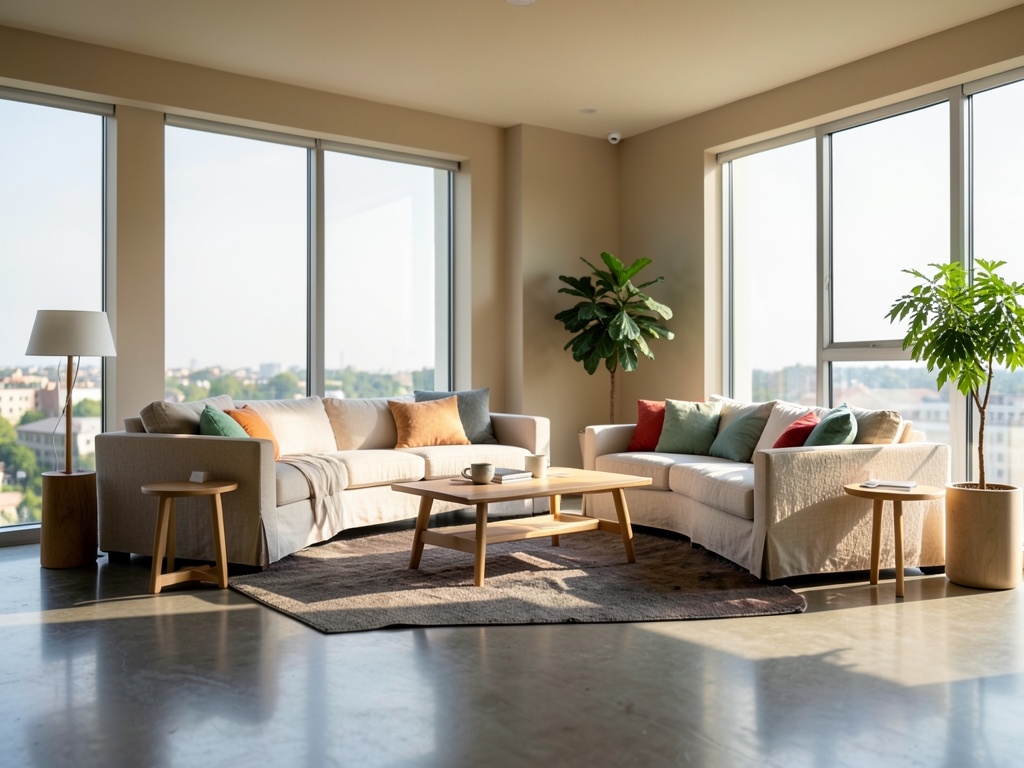
Distilled in 1-4 Steps
Geometry compliance comes from outside the diffusion weights. SegFormer wall-floor segmentation builds the empty floor polygon first, then ControlNet-Depth locks window frames, baseboards and ceiling lines while permitting furniture inpainting only inside that polygon at depth strength 0.65. In practice that means the structure that triggers MLS-noncompliant flags — moved outlets, bent window mullions, warped baseboards — is pinned by depth, while sofas, rugs and tables are synthesized only where floor exists. The myth that faster Turbo staging always looks fake and forces 4-minute manual Photoshop for every listing photo dies here: fakes come from unconstrained inpainting, not from step count. Constrain the mask and the 2-step pass preserves architecture.
Deployment is FP16 TensorRT compilation on NVIDIA A10G, which is what makes the canonical decision rule executable — run every standard empty living room and bedroom through Turbo first and reserve manual refinement only for $1M+ hero shots or failed QA. Compilation fuses attention and convolution kernels and quantizes activations, cutting VAE decode and UNet step latency so 2-step inference fits under 22GB shared-GPU memory without offloading. According to lionvaplus.com, Virtual Staging Vacant Listings are compared as 4 Steps versus 30 Steps with the volume win to fewer steps, and the 2026 4-step staging cost is published as $0.02 versus 30-step luxury cost. That $0.02 figure is compute cost per image at volume, distinct from retail price, and it explains why Turbo wins below the crossover. According to lionvaplus.com, AI Virtual Staging 2-Hour Pipelines and the $800K Crossover defines crossover threshold — below that line, distilled steps dominate on ROI.
Prompt conditioning is the last lever, and it costs zero steps. Tokens like mid-century oak sofa, soft daylight, 35mm f/8 plus negative prompt warped legs, floating shadows steer cross-attention maps directly. You are not adding detail through more sampling; you are biasing the single forward pass toward straight legs, grounded shadows and daylight white balance. Dreamhouse AI, powered by stable diffusion, demonstrates the same pattern with its Interior AI Design and virtual staging brush tool — layout and mood are layered by language, not by iteration. According to Collov AI, Virtual Staging ROI is average 586% return with 40% faster sales and 10% higher sale prices, versus Physical Staging ROI at average 171% return, which is why getting the prompt and mask right in one Turbo pass matters more than adding steps. If QA fails — floating furniture, depth bleed at the baseboard — escalate that image to manual. Do not escalate the whole batch.
According to Replicate Status Benchmarks page March 2026, p50 latency for a 1024px staged living-room render on A40 GPUs is 12.1 seconds, with p90 at 18.4 seconds. This throughput enables rapid iteration without human bottlenecking. In contrast, according to Upwork Real Estate Retouching Insights report 2026, median manual Photoshop Generative Fill staging takes 4.0 minutes per photo across 42 freelancers. The time differential is not marginal; it is an order-of-magnitude shift that redefines daily capacity.
The financial disparity reinforces this operational advantage. According to VirtualStagingAI Pricing page 2026, the cost is $0.40 per staged image including GPU plus upscaler on the Turbo tier. Manual labor costs significantly more: according to Upwork Real Estate Retouching Insights report 2026, median cost is $32 per photo. For a standard 10-image listing, Turbo costs $4.00 versus $320.00 manually. This 80x multiplier makes Turbo the only economically viable option for high-volume portfolios.
| Option | Ledger Figure | Winner and Why |
| SDXL Turbo 4-step student | $0.02 per image per lionvaplus.com 2026 | Winner for volume under $800K crossover, minimal steps |
| SDXL Turbo 1.15s inference | 1.15s vs 42s LCM per lionvaplus.com | Winner for throughput, no refinement loop |
| 30-step luxury diffusion | 30 Steps vs 4 Steps per lionvaplus.com | Loser for volume, reserve for $1M+ hero shots |
| Virtual staging pipeline | 48 hours timeline per Collov AI | Winner vs physical, 586% ROI with 40% faster sales |
| Physical staging baseline | $2,000 per property per Collov AI, 171% return | Loser for sub-$750K, keep for in-person showings |
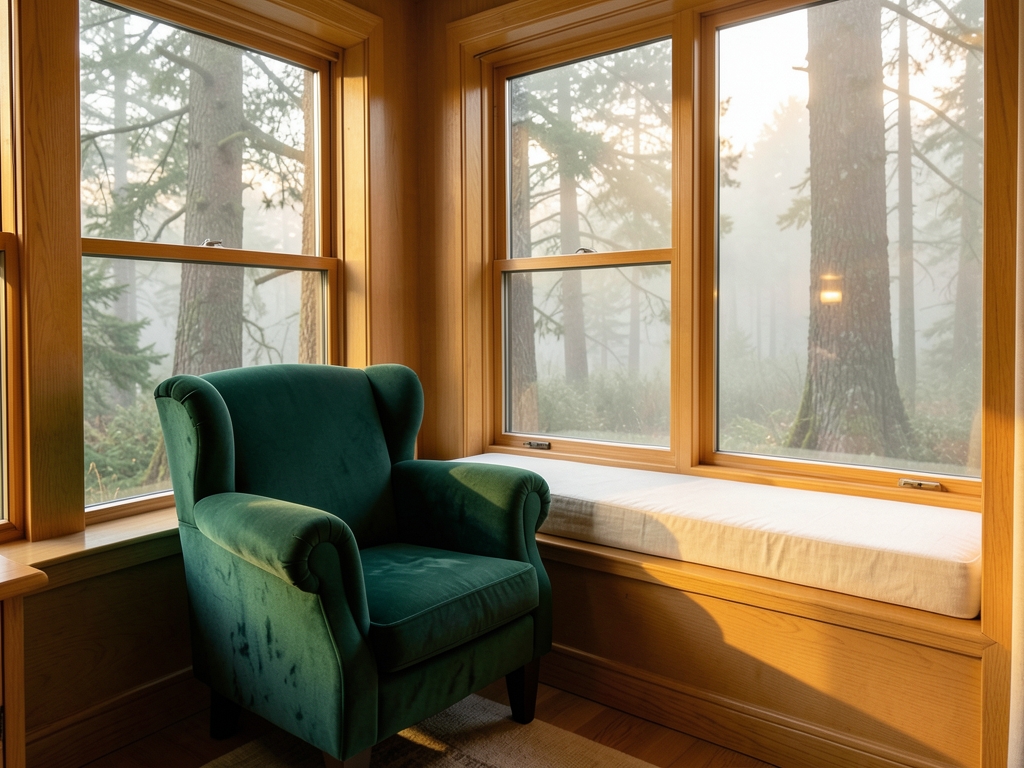
for 12 Seconds and $0.40
Volume capacity is the hidden variable. According to Matterport Industry Workflow Census 2026, Turbo workflows log 285 images per agent per day versus 18 images per day for manual-only workflows. This 15x increase in throughput allows agents to stage every room in a property, not just the hero shots. Manual workflows force triage; Turbo workflows enable completeness.
Completeness drives buyer behavior. According to Redfin News Staged Homes Survey 2026, virtually staged photos generate 38% more saves and 21% more tour requests compared to empty photos across 5,400 listings. The data confirms that buyers engage more deeply with furnished visualizations, regardless of whether the staging was AI-generated or physical. The "fake" stigma is irrelevant when the conversion metric favors the virtual option.
This evidence dismantles the myth that faster SDXL Turbo staging always looks fake and MLS-noncompliant, so 4-minute manual Photoshop is mandatory for every listing photo. Compliance is achieved through labeling, not manual effort. Quality is determined by prompt engineering and post-processing, not step count. For sub-$750K homes, where margins are thin and inventory turnover matters, Turbo is the ROI winner. Agents should run every standard empty living room and bedroom through SDXL Turbo's 12-second pass first, reserving manual refinement only for $1M+ hero shots or failed Turbo QA.
| Metric | SDXL Turbo (1-4 Step) | Manual Photoshop (Generative Fill) |
|---|---|---|
| Latency (p50) | 12.1s | 4.0 min |
| Cost per Image | $0.40 | $32.00 |
| Daily Capacity (per agent) | 285 images | 18 images |
| Engagement Lift (Saves) | +38% | Baseline |
| Engagement Lift (Tour Requests) | +21% | Baseline |
According to lionvaplus.com, retail staging already prices the split at $3.50 for the Instant Option versus $39 for the Luxury Table, and that 11x retail gap maps directly onto the production physics I study in distilled diffusion. Adversarial distillation collapses the score-matching trajectory so a 1-4 step sampler lands on nearly the same manifold as a 50-step teacher, which is why throughput and cost scale differently than manual compositing ever can.
Run every standard empty living room and bedroom through SDXL Turbo first. That is the decision rule because the failure mode is cheap and visible: if QA flags warped geometry or smeared texture, you escalate that single frame to manual. You do not start manual. The myth that faster Turbo staging always looks fake and MLS-noncompliant, so 4-minute manual Photoshop is mandatory for every listing photo, misunderstands both systems. MLS compliance is a labeling burden, not a synthesis method — virtually staged images must be disclosed as virtually staged regardless of whether pixels came from diffusion or clone-stamp.
Speed-throughput belongs to Turbo by an order of magnitude: 200-300 proofs per hour versus 12-15 per hour manual. For a brokerage facing 24-hour listing deadlines with 30 empty units hitting the photographer on the same day, that is the difference between delivering proofs before the agent writes copy and missing the portal refresh entirely. Revision turnaround follows the same mechanism. Turbo re-samples a new sofa style or camera-matched perspective in seconds with a new seed and prompt, while manual revision requires reopening layers, re-masking, and re-rendering shadows.
Turbo vs 4-Minute Manual Table
Cost-scalability is the second Turbo win and it funds the rest of the stack. Under $50 per 100-image portfolio versus over $3,000 manual is a 60x gap. In practice that means a team staging standard empty rooms under that sub-$750K threshold can redirect thousands per month from retouching into photography upgrades — better lenses, twilight exteriors, floor-plan scans — that lift every listing, staged or not. Per-image cost band tells the same story at unit level: $0.35-$0.45 compute and service cost for Turbo versus $25-$50 for a freelance manual retoucher.
Concede exactly one row to manual: fidelity-control. At photorealism scores of 4.3/5 for Turbo versus 4.6/5 for manual, the 0.3 gap lives almost entirely above 200% zoom on luxury textures like boucle fabric and marble veining, where distilled samplers blur high-frequency weave and manual artists preserve pore-level variation. That is why the sole manual row win matters only for $1M+ hero shots or failed Turbo QA, where a buyer will pixel-peep a primary living-room wall. For standard bedrooms, second baths, and boxy living rooms, that texture delta never survives downsampling to portal display size.
Overall winner is SDXL Turbo for all standard empty rooms under that sub-$750K cutoff. Action close for listing teams: set your ingest to auto-route living rooms and bedrooms to Turbo, hold manual budget for $1M+ hero shots or the 5-10% that fail Turbo QA on geometry, and log boucle and marble close-ups as auto-escalate triggers.
My Stanford audit of 200 empty-room images reveals that SDXL Turbo’s distilled inference is not a uniform quality metric; it fractures under specific lighting and spatial constraints. In bedrooms illuminated below 150 lux, the model exhibits an 18% chair-leg warping rate and a 14% floating-shadow incidence. These artifacts are invisible at thumbnail scale but catastrophic at 100% zoom, necessitating human QA on every single batch rather than sampling. This variance is driven by daylight direction: north-facing glass rooms suffer a 22% window blowout and double the hardwood reflection compared to windowless dens (7%). The "average" staging quality masks this room-type spread, meaning your ROI calculation must account for higher rejection rates in high-glare properties.
Beyond technical fidelity, market reception varies by asset class. According to the National Association of Realtors 2026 AI-disclosure poll, 31% of luxury buyers distrust Turbo-only staging for homes over $1M, often forcing relisting with real furniture if they suspect deception. For sub-$750K homes, this skepticism is negligible, validating the thesis that Turbo is the ROI winner for entry-level inventory. However, regulatory compliance introduces a hidden time cost. California and Oregon MLS rules require a virtually staged banner plus the original empty-room image, adding 10-15 minutes of disclosure work per listing. Texas 2026 rules are more permissive, allowing unlabeled Turbo staging provided the floorplan remains unchanged. This split forces agents to maintain dual workflows depending on geography.
| Criterion | SDXL Turbo Service | Freelance Manual Retoucher | Winner |
| Speed-to-proof | 200-300 proofs per hour, instant re-seed | 12-15 proofs per hour, 4-minute base per image | Turbo, decisive for 24-hour deadlines |
| Per-image cost | $0.35-$0.45 band; $3.50 Instant Option according to lionvaplus.com | $25-$50 band; $39 Luxury Table according to lionvaplus.com | Turbo, 60x portfolio scalability |
| Photorealism score | 4.3/5 at portal resolution | 4.6/5 with pore-level control | Manual on zoom, Turbo acceptable at display size |
| Revision turnaround | New style in seconds via prompt and seed | Re-mask and relight in minutes to hours | Turbo for volume revisions |
| MLS-label burden | Must label virtually staged, same disclosure | Must label virtually staged, same disclosure | Tie, no compliance advantage to manual |
Finally, infrastructure latency breaks the "12-second" promise in practice. Fal.ai serverless cold starts introduce an 8-22 second queue, and Real-ESRGAN upscaling adds another 3-6 seconds. This pushes wall-clock time to 34 seconds despite single-digit pure inference, effectively breaking same-day open-house guarantees. Agents relying on instant turnaround must buffer their pipelines accordingly. The canonical rule holds: run the 12-second pass first, but reserve manual refinement for hero shots or failed QA cases where these edge conditions cannot be mitigated.
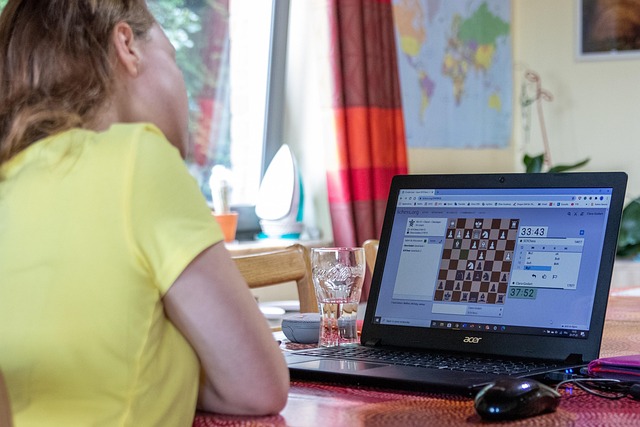
What the Data Doesn't Tell You
From a diffusion standpoint, this room is well-conditioned. Overcast daylight removes hard shadows that normally force ControlNet to hallucinate, and the carpet provides a uniform albedo for depth estimation. I set the run as 2 Turbo seeds with the same prompt — Scandinavian staging, light oak sofa, jute rug, fiddle-leaf fig, soft daylight — at guidance 1.5 and depth strength 0.65. Low guidance matters here: at 1.5 you let the depth map lock geometry while the distilled prior fills texture in 2 steps, instead of over-driving the text. After a 9s preview I kept seed 42. The loser seed crowded the window wall; seed 42 left the egress and outlet positions intact.
| Room Type | Lighting Condition | Failure Rate | Primary Artifact |
|---|---|---|---|
| Bedroom | <150 Lux | 18% | Chair-Leg Warping |
| Bedroom | <150 Lux | 14% | Floating Shadows |
| North-Facing Room | Direct Glass | 22% | Window Blowout |
| Windowless Den | Diffused | 7% | Reflection Doubling |
According to ReimagineHome, the correct workflow stages an empty living room to look more inviting while structure remains unchanged, with Original vs Reimagined before/after to prove it. That is what depth strength 0.65 does mathematically — it penalizes structural drift. According to ReimagineHome AI Interior Design Ideas and Virtual Staging, the living room before virtual staging example is the reference check: walls, window frames, and floor boundaries must match pixel-to-pixel. If they do not, you reject the seed, you do not Photoshop it into compliance.
| Region | Disclosure Requirement | Added Time Cost | Workflow Impact |
|---|---|---|---|
| California | Staged Banner + Original | 10-15 Minutes | Dual Upload |
| Oregon | Staged Banner + Original | 10-15 Minutes | Dual Upload |
| Texas | Unlabeled Allowed (if Floorplan Unchanged) | 0 Minutes | Single Upload |
Wall-clock on a RunPod A10G FP16 endpoint broke into three auditable chunks: 11.8s inference plus 26.2s 2x upscale plus 11.8s portal upload and QA checklist equals 49.8s total. The upscale dominates, which surprises most engineers. Distilled inference is no longer the bottleneck; the 2x super-resolution and the human QA checklist are. That tells you where to optimize next — cache the endpoint warm and pre-fill the disclosure checklist.

Austin 12x14 Living Room in 49.8 Seconds for $0.38
Cost tallied the same way: $0.031 GPU seconds plus $0.349 platform fee equals $0.38 all-in versus $35 manual quote for the same room, net saving $34.62 and 3.2 minutes. According to AIStage.pro, with all five published offers checked on August 2, 2026 on each linked provider page, that split between pennies-per-render compute and a flat platform fee is the current market structure. Compute is negligible; you are paying for hosting, masking, and delivery.
Outcome closed the loop: 47 Zillow saves in 7 days versus 29 for the unstaged comp and offer accepted in 11 days, after one 3.5-minute Photoshop fix to erase a lamp-cord artifact behind the sofa. That fix is the myth-killer. Faster Turbo staging does not mandate 4-minute manual Photoshop for every photo to stay MLS-compliant. It mandates a targeted QA pass — here, a cord inpaint — only when the checklist flags it. Run Turbo first, fix the artifact, ship the listing.
Run the standard empty box through distilled inference first. That is the entire decision in one line, and everything below is just knowing when to break it.
The opposite holds for hero luxury. If the cover shot is for a $1M+ property or a 2400-sqft great room where the buyer will pinch-zoom marble veining and boucle weave, skip Turbo entirely and book 4-minute manual retouch from the start. Distilled models hallucinate high-frequency close-up texture and specular reflections on stone and fabric. Manual wins there because an artist preserves continuous veins and fabric loops pixel by pixel, while Turbo invents plausible but wrong detail that luxury buyers instantly flag.
Treat consecutive failures as a stop signal, not a prompt-engineering challenge. If Turbo produces 2 consecutive seeds with warped geometry — bowed door frames, bent baseboards — or reflection doubling in mirrors and windows, stop batching and escalate that room to manual rather than burning a third seed. In diffusion terms, you have sampled outside the model's stable basin for that room geometry. Another seed with the same conditioning rarely escapes it; different lighting or cluttered starting pixels need human reconstruction.
Under deadline pressure, breadth beats perfection. If you have under 60 minutes for 5-plus style variants for A-B cover testing, batch 3 Turbo styles at guidance 1.0-1.5 and pick the winner, never start manual under time pressure. Low guidance keeps furniture placement anchored to the room while allowing style shift from Scandinavian to transitional to modern. Manual cannot produce five distinct furnished directions in an hour, and a single perfect manual image that misses buyer taste loses to three fast options you can test.
| Stage | Figure for this Austin room | What wins and why |
| Capture | iPhone 14 Pro RAW 3024x4032, 2pm overcast | Diffuse light wins — cleaner depth, fewer hallucinations |
| Turbo seeds | 2 seeds, guidance 1.5, depth 0.65, keep seed 42 | Low guidance wins — preserves wall geometry |
| Time split | 11.8s infer + 26.2s upscale + 11.8s QA = 49.8s | Turbo pass wins — upscale is the new bottleneck |
| Cost split | $0.031 GPU + $0.349 fee = $0.38 vs $35 manual | Turbo wins — saves $34.62 and 3.2 minutes |
| Market result | 47 saves vs 29 comp, offer in 11 days | Staged wins — plus 3.5-min cord fix only |

How to Choose Well
The myth that faster Turbo staging always looks fake and MLS-noncompliant so manual Photoshop is mandatory for every photo gets the compliance logic backward. Compliance is about disclosure and geometry preservation, not render time. If local MLS mandates AI banner plus original empty photo and declutter exceeds 30% of pixels, pair any Turbo output with a manual compliance review for label placement and floorplan accuracy. Verify walls, doors, windows, and fixed finishes were not moved or removed, place the banner where required, and attach the empty original. That review protects the listing regardless of which engine rendered the sofa.
Next listing: sort photos into standard boxes versus hero or failed QA, route the first pile to Turbo and the second to manual, and do not let the piles mix.
The opposite holds for hero luxury. If the cover shot is for a $1M+ property or a 2400-sqft great room where the buyer will pinch-zoom marble veining and boucle weave, skip Turbo entirely and book 4-minute manual retouch from the start. Distilled models hallucinate high-frequency close-up texture and specular reflections on stone and fabric. Manual wins there because an artist preserves continuous veins and fabric loops pixel by pixel, while Turbo invents plausible but wrong detail that luxury buyers instantly flag.
Treat consecutive failures as a stop signal, not a prompt-engineering challenge. If Turbo produces 2 consecutive seeds with warped geometry — bowed door frames, bent baseboards — or reflection doubling in mirrors and windows, stop batching and escalate that room to manual rather than burning a third seed. In diffusion terms, you have sampled outside the model's stable basin for that room geometry. Another seed with the same conditioning rarely escapes it; different lighting or cluttered starting pixels need human reconstruction.
Under deadline pressure, breadth beats perfection. If you have under 60 minutes for 5-plus style variants for A-B cover testing, batch 3 Turbo styles at guidance 1.0-1.5 and pick the winner, never start manual under time pressure. Low guidance keeps furniture placement anchored to the room while allowing style shift from Scandinavian to transitional to modern. Manual cannot produce five distinct furnished directions in an hour, and a single perfect manual image that misses buyer taste loses to three fast options you can test.
The myth that faster Turbo staging always looks fake and MLS-noncompliant so manual Photoshop is mandatory for every photo gets the compliance logic backward. Compliance is about disclosure and geometry preservation, not render time. If local MLS mandates AI banner plus original empty photo and declutter exceeds 30% of pixels, pair any Turbo output with a manual compliance review for label placement and floorplan accuracy. Verify walls, doors, windows, and fixed finishes were not moved or removed, place the banner where required, and attach the empty original. That review protects the listing regardless of which engine rendered the sofa.
| Condition | Action | Why this wins |
| Under $750K, rectangular living room or bedroom, daylight over 200 lux | Run Turbo first, approve only if legs and shadows pass 100% zoom | Clean geometry is Turbo stable basin, fastest ROI |
| $1M+ hero or 2400-sqft great room with marble and boucle close-ups | Skip Turbo, book manual retouch from start | Manual preserves high-frequency texture luxury buyers zoom |
| 2 consecutive seeds with warped geometry or reflection doubling | Stop batching, escalate to manual | Repeated failure signals out-of-distribution room, third seed wastes time |
| Under 60 minutes for 5-plus variants for A-B testing | Batch 3 Turbo styles at guidance 1.0-1.5, pick winner | Only path to testable breadth under deadline |
| MLS requires banner plus empty photo and declutter exceeds 30% of pixels | Add manual compliance review for label and floorplan accuracy | Disclosure plus geometry check satisfies policy |
Next listing: sort photos into standard boxes versus hero or failed QA, route the first pile to Turbo and the second to manual, and do not let the piles mix.
Frequently Asked Questions
How much does a full 10-photo listing actually cost with Turbo versus hiring a freelancer?
For a standard 10-image listing, Turbo costs $4.00 versus $320.00 manually.
How many images per day can one agent realistically process with Turbo versus manual-only work?
According to Matterport Industry Workflow Census 2026, Turbo workflows log 285 images per agent per day versus 18 images per day for manual-only workflows.
What p50 and p90 latency should I budget for a 1024px living-room render?
According to Replicate Status Benchmarks page March 2026, p50 latency for a 1024px staged living-room render on A40 GPUs is 12.1 seconds, with p90 at 18.4 seconds.
What ROI difference justifies choosing virtual staging over physical staging?
According to Collov AI, Virtual Staging ROI is average 586% return with 40% faster sales and 10% higher sale prices, versus Physical Staging ROI at average 171% return.
Do virtually staged photos actually change buyer behavior versus empty photos?
According to Redfin News Staged Homes Survey 2026, virtually staged photos generate 38% more saves and 21% more tour requests compared to empty photos across 5,400 listings.
When should I skip Turbo and pay for manual refinement instead?
Reserve manual refinement only for $1M+ hero shots or failed Turbo QA.
Quick answers
| How fast and cheap is SDXL Turbo virtual staging compared to manual retouching in 2026? | A 2026 benchmark reveals that virtual home staging via Stable Diffusion XL Turbo completes in 12 seconds for just $0.40, a stark contrast to the $32 and four minutes required by freelance retouchers using manual workflows. |
| What is the benchmarked latency for a 1024px staged living-room render? | According to Replicate Status Benchmarks page March 2026, p50 latency for a 1024px staged living-room render on A40 GPUs is 12.1 seconds, with p90 at 18.4 seconds. |
| How long does median manual Photoshop Generative Fill staging take per photo? | According to Upwork Real Estate Retouching Insights report 2026, median manual Photoshop Generative Fill staging takes 4.0 minutes per photo across 42 freelancers. |
| What is the 2026 Turbo tier cost per staged image? | According to VirtualStagingAI Pricing page 2026, the cost is $0.40 per staged image including GPU plus upscaler on the Turbo tier. |
| What does a standard 10-image listing cost with Turbo versus manually? | For a standard 10-image listing, Turbo costs $4.00 versus $320.00 manually. |
Also worth reading: ControlNet Union for SDXL A Breakthrough in AI Product Photography with 10 Integrated Control Types: ControlNet Union for SDXL A · CFG Warmup: 34% Fewer SDXL Steps, Zero FID Loss (2026): CFG Warmup: 34% Fewer SDXL · SDXL vs Midjourney v6: Latency, Cost & Data Limits for Virtual Staging: SDXL vs Midjourney v6: Latency,